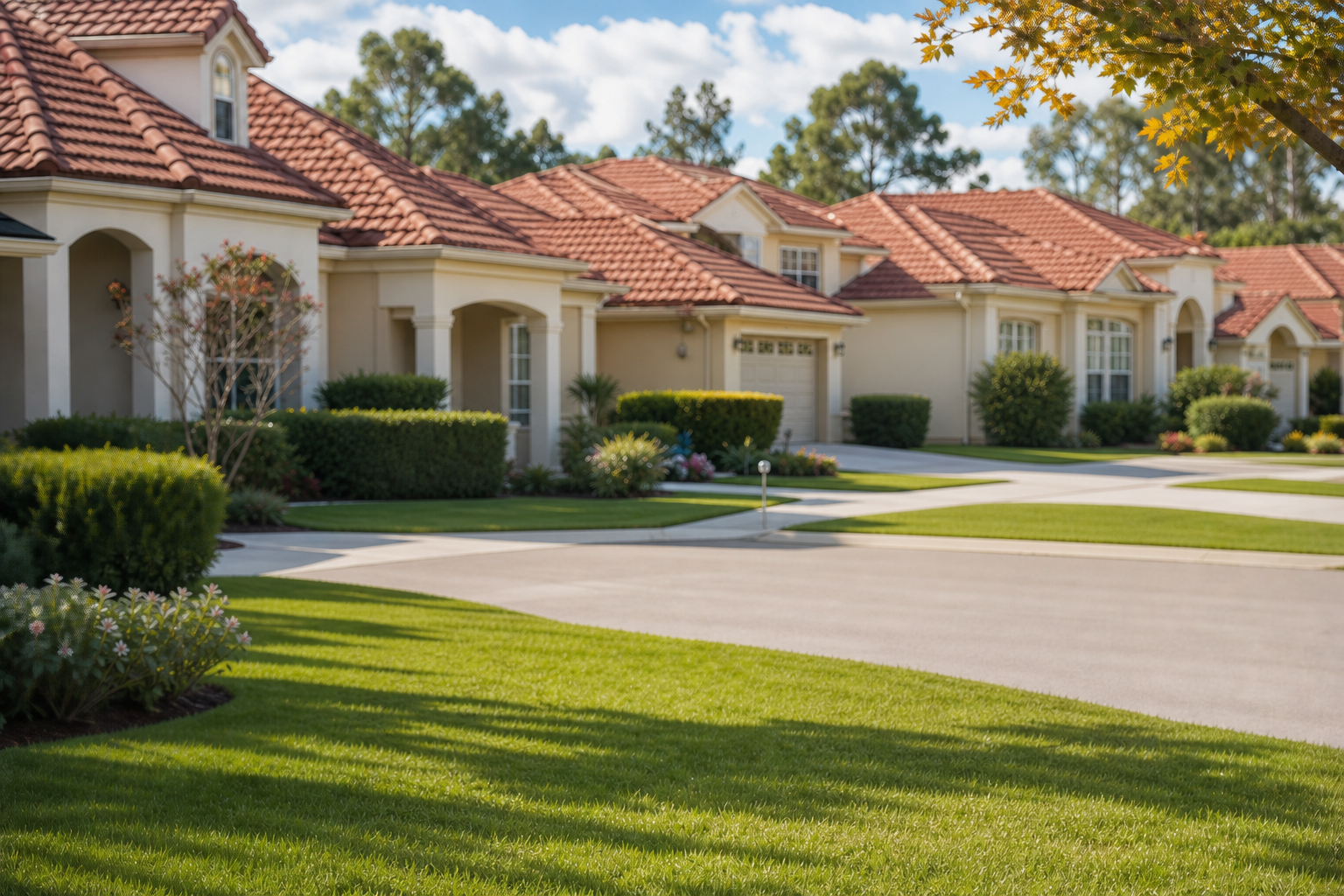
If you've been following the 2026 Atlantic hurricane season, you'll know it's been relatively quiet so far. No major landfalls, no Frances-and-Jeanne repeat, no reason to panic. And for homeowners across Stuart, Port St. Lucie, and the wider Treasure Coast, that's genuinely good news.
But here's the thing about a quiet season: it ends in November, and a quiet season doesn't mean a safe roof.
The storms that caused the most damage on the Treasure Coast in recent memory — Frances and Jeanne in 2004, Matthew in 2016, Dorian in 2019, Milton in 2024 — didn't announce themselves politely. Some of the worst roofing damage we see isn't from a single named storm at all. It's from the slow, cumulative effect of a season's worth of rain, wind, and heat on a roof that was already past its prime going in.
A quiet season is actually the best time to look at your roof. There's no emergency, no insurance backlog, no contractor shortage. It's the moment when you can make an informed decision rather than a panicked one.
Here's what we'd recommend every Treasure Coast homeowner do before November 30.
Get Eyes on the Roof — From the Ground First
You don't need to climb up there. Start from the ground with a pair of binoculars or just walk the perimeter of your home and look up.
What you're looking for: shingles that are curling at the edges or lifting at the corners, tiles that look cracked, shifted, or missing altogether, dark patches where granules have worn away from asphalt shingles, visible sagging in the roofline, or flashing that looks bent, separated, or corroded around chimneys, vents, and skylights.
Any one of these is worth a closer look. More than one is worth a call.
Check Inside the Attic
This one gets skipped constantly, and it's one of the most useful things you can do. On a bright day, go into your attic and look up. If you can see daylight coming through the roof deck anywhere, that's a problem. If you can smell must or mildew, that often means water has been getting in somewhere — possibly for a long time before any ceiling stain appears below.
While you're up there, look at the underside of the decking for water staining, dark spots, or soft areas. Check the insulation for signs of moisture. And if your home was built before 2002, take note of how the roof deck is fastened — older ring-shank nailing patterns and thinner decking are among the first things Florida's updated building codes addressed after the 2004 storm season, and they matter significantly in high-wind events.
Know Your Roof's Age
This sounds obvious, but a surprising number of homeowners don't actually know how old their roof is.
If you bought your home without a clear record, your best sources are the previous owner's disclosure statement, your home inspection report, or a permit search through your county building department — Martin County and St. Lucie County both maintain searchable permit records online. If a permit was pulled for a roof replacement, the date will be there.
Why does this matter? In South Florida's climate, asphalt shingles typically have a real-world lifespan of 15 to 20 years — shorter than the manufacturer's ratings, because Florida's heat, humidity, and UV exposure are among the most demanding in the country. Metal roofing lasts significantly longer. Tile can last 50 years or more, though the underlayment beneath it often needs attention before the tiles themselves do.
If your roof is approaching or past 15 years, a professional inspection before hurricane season ends is worth doing — not because something is necessarily wrong, but because knowing where you stand gives you options. You can plan, budget, and decide on your own terms rather than waiting for a claim to force the decision.
Understand What Your Insurance Actually Covers
Florida's homeowner's insurance market has changed significantly in recent years, and the rules around roof coverage are worth knowing before you need them.
Most Florida policies now include a percentage-based hurricane deductible — typically 2% to 5% of your insured home value — that applies specifically to named storm damage. On a home insured for $400,000, a 2% hurricane deductible means you're covering the first $8,000 of any named storm claim yourself. That's not a small number, and it's worth knowing before the next storm is named.
It's also worth understanding whether your policy covers replacement cost value or actual cash value for the roof. Replacement cost covers what it costs to replace the roof today. Actual cash value deducts for depreciation — which on a 15-year-old shingle roof in Florida can be significant. Check your declarations page, and if you're not sure, call your insurer and ask directly.
One more thing: if your roof is over 15 years old, some private carriers will either exclude wind coverage for the roof or require a separate inspection before renewing. Citizens Insurance has specific age thresholds that affect coverage eligibility. If you haven't looked at your policy recently, the end of hurricane season — when you're not in the middle of a claim — is the right time to read it.
Get a Wind Mitigation Inspection If You Don't Have One
If you've replaced your roof in the last five years and haven't had a wind mitigation inspection, you may be leaving money on the table every single year.
A wind mitigation inspection is a state-standardised evaluation of your home's hurricane-resistant features — hip roof shape, sealed deck, secondary water resistance, and how the roof connects to the walls of the house. The results are submitted to your insurer on Florida's OIR-B1-1802 form, and by law, your insurer is required to apply premium credits based on what the inspection finds.
For many Treasure Coast homeowners, these credits can be meaningful. The exact savings depend on your carrier, your coverage amount, and which features your roof qualifies for — we can't give you a specific number — but for homeowners who've never had an inspection, or whose inspection is more than five years old, it's worth doing. The inspection itself typically costs $75 to $150 and can be scheduled in an afternoon.
Don't Wait for a Storm to Find Out
The Treasure Coast has a long memory when it comes to hurricanes. Frances hit on September 5, 2004. Jeanne followed on September 25 — the same season, the same area, and for many homeowners, the same already-damaged roof.
A quiet season is a gift. It gives you time to look at your roof clearly, understand what you have, and make a considered decision about what comes next. It doesn't guarantee next season will be the same.
If you'd like a free, honest assessment of your roof before the season ends, we're happy to come out and take a look. We'll tell you what we see — and if everything looks fine, we'll tell you that too.
Call or text: (772) 325-1727
Oak & Anchor Roofing serves Stuart, Port St. Lucie, Jensen Beach, Palm City, Hobe Sound, Fort Pierce, Jupiter, Tequesta, and Hutchinson Island. GAF certified · Licensed CBC-1269569 · CCC-1337735 · 10-year workmanship warranty.